
overview
About Sociology Department
The Department of Sociology was established in 1972, at the very inception of Vasantrao Naik Mahavidyalay. It was founded on the vision of the Hon. Principal Rajaramji Rathod — to build an institution for the advancement of the socially and economically underprivileged. The department was introduced to amplify the ideals of secularism, equality, fraternity, and justice, and to cultivate a scientific social outlook among students.
Smt. Lila Shinde was the first Head of Department — a university merit holder, member of the Board of Studies at Dr. BAMU Aurangabad, and member of the Maharashtra State Adult Education Institution. She was honoured with the Best Teacher Award of the Government of Maharashtra. In her memory, an award of ₹500 in the name of Dr. Irawati Karve has been instituted for the student securing highest marks in Sociology.
Another distinguished faculty member, Mr. N. S. Ragade, was a social activist who actively participated in the Namantar Movement and made substantial contributions to the department.
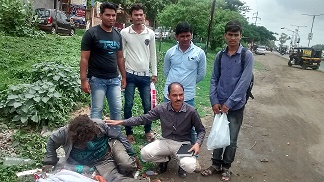
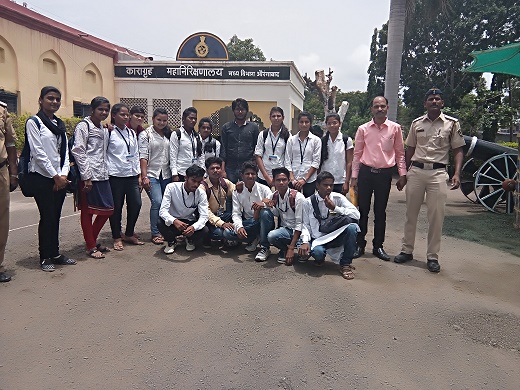
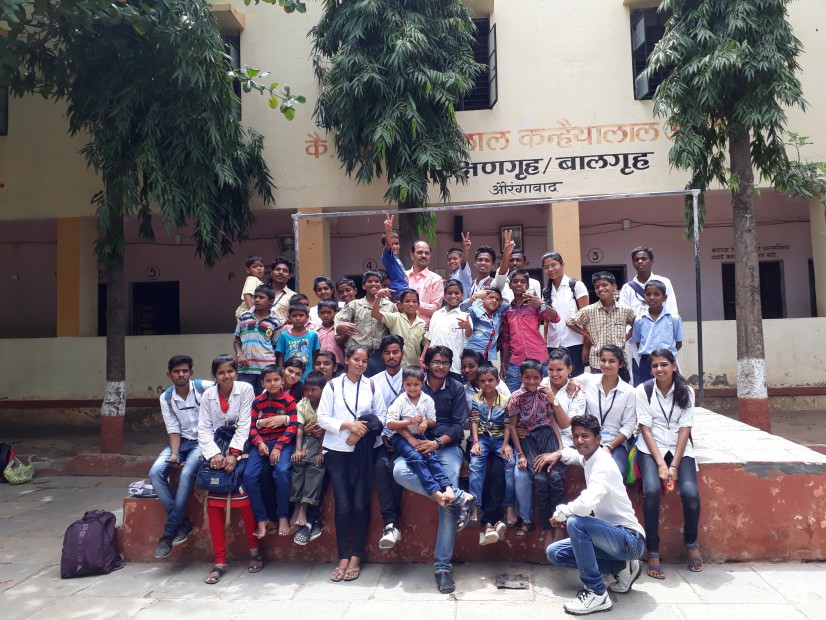
Beyond classroom teaching, the department organises study tours, field visits, group discussions on social issues, and has undertaken visits to the Children’s Remand Home and Harsul Central Prison, Aurangabad — instilling social commitment and humanitarian values in students.
Head of department

Dr. Devraj Kondiba Darade
M.A., M.Phil., Ph.D., SET
department shedule
Mon – Tue
10:00 AM – 5:00 PM
Wed- Thu
10:00 AM – 5:00 PM
Friday
10:00 AM – 5:00 PM
2nd and 4th Sat
Open
Sunday
Closed
What We Offer
Programmes Offered
Curriculum
Teaching Syllabus
Programme Outcomes
Course / Outcome
Outcome Statements
Paper I — Introduction to Sociology
Nature and scope of sociology; basic concepts of society, social systems, groups, and institutions; functionalist and conflict perspectives; analysis of social problems and social change.
Paper II — Individual & Society
Nature of culture; social stratification; caste and class systems; social change; conformity and deviance.
Paper III — Introduction to Sub-fields of Sociology
Urban vs. rural sociology, basics of social psychology, political sociology, and anthropology, applications of sociology.
Paper IV — Indian Social Composition
Features of Indian society, forms of diversity, population characteristics, population planning and control, democracy, secularism, and rural-agrarian structure.
Paper V — Problems of Rural India
Institutional issues, domestic violence and dowry, illiteracy, rural economy problems, issues in development.
Paper VI — Contemporary Urban Issues
Urbanisation concepts, migration, urban planning, problems of urbanisation, globalisation implications for cities.
Paper VII — Population in India
Causes and consequences of population growth, fertility and mortality, demographic transition, India’s new population policy, population control awareness.
Paper VIII — Sociology of Development
Conceptual perspectives on development, sustainable development, problems of weaker sections, capitalist, socialist, and mixed development approaches, government welfare schemes.
Paper IX — Sociological Tradition
Emergence of sociological thought, classical thinkers — Auguste Comte, Herbert Spencer, Emile Durkheim, Karl Marx, and Max Weber, key theories including class struggle and Protestant ethics.
Paper X — Introduction to Research Methodology
Research objectives, designs, and sampling, qualitative and quantitative research techniques, measurement, scaling, data analysis, and hypothesis testing.
Paper XI — Social Problems in India
Conceptual analysis of social problems, patterns of deviance, inequality, commercialisation of agriculture, diverse forms of social inequality.
Paper XII — Project Work
Scientific study of social deviation, stratification, class, mobility, religion, culture, and law, promotes social service commitment and humanitarian approach.
Paper XIII — Sociological Theories
Development of sociological theory, comparison of theoretical orientations, historical and cultural context of theories, application of sociological imagination to real life.
Paper XIV — Social Research Methods
Primary techniques of social research, methodological approaches, computer applications and statistics in sociology, research design and knowledge of welfare schemes.
Paper XV — Social Disorganization in Contemporary India
Social disorganization, violence, disorder, naxalism, and terrorism, regionalism and regional imbalance, awareness of disorganization causes and solutions.
Paper XVI — Project Work
Extension of Paper XII — in-depth research project on any area of sociological significance, encourages independent thinking and logical conclusion-drawing.
Upon completion of the B.A. Sociology programme, graduates will be able to:
Our Faculty
Teaching Staff
No faculty found for this department.
Departmental Events
Recent Activities
Our Graduates
Alumni Voices
Our graduates have gone on to lead in industry, academia, and research. Discover the journey of our alumni and how they are shaping the world.
Gallery